What desk rejection actually means
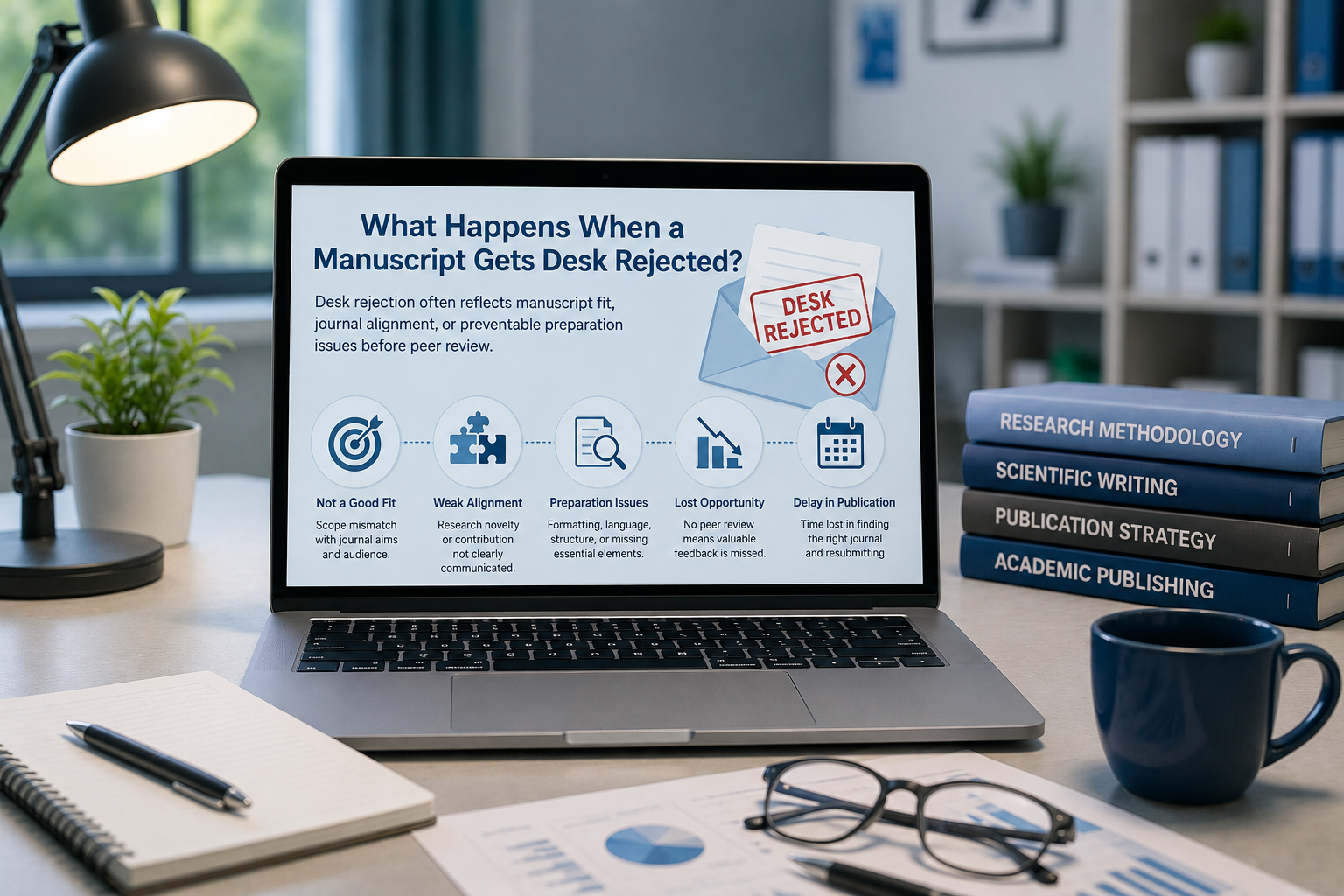
A desk rejection happens when an editor decides not to send a manuscript for peer review. This decision is usually made after an initial assessment of quality, relevance, journal fit, and compliance with submission guidelines.
The outcome can be discouraging, but it is not always a judgment on the study's potential value. In many cases, the manuscript is simply not well matched to the journal's focus or not sufficiently prepared for the target venue.
Common reasons for desk rejection
1. Scope mismatch
The paper may address a topic that falls outside the journal's intended focus. Even if the science is strong, the editor may decide that the study is unlikely to fit the publication's readership or editorial priorities.
2. Poor manuscript fit
If the manuscript does not match the journal's typical article type, methodology, or structure, it may be rejected before review. This is why careful journal selection is a crucial early step in publication strategy.
3. Missing submission requirements
Formatting issues, incorrect style, incomplete author information, or missing required documents may trigger an immediate desk rejection. Editors often expect compliance with journal-specific instructions before reviewing the science itself.
4. Weak novelty or clarity
When the manuscript's contribution is unclear or the study does not convincingly advance the field, editors may decide the paper is unlikely to succeed in peer review and decline it at the desk stage.
How to reduce the risk
- Choose journals with clear scope alignment.
- Read the author guidelines carefully before submission.
- Make sure the title, abstract, and introduction clearly explain the manuscript's novelty.
- Check whether your study type and methodology match the journal's article formats.
- Review the manuscript for language, structure, and technical coherence before sending it to editors.
A desk rejection is not always the end of the publication journey. It can be a signal to reassess journal targeting, revise the manuscript's framing, or strengthen the article to better match the intended venue.
A constructive way forward
Instead of treating a desk rejection as a failure, many researchers use it as a quality checkpoint. It is often a chance to refine the journal strategy, rewrite the abstract or cover letter, and improve the manuscript's alignment with the target audience.
This is where editorial support can make a difference. At InnoScientica, we help researchers strengthen journal fit, improve submission readiness, and reduce preventable desk-rejection risks before submission.